Saturday, October 26, 2013

Week 4: Medicine and Art


After completing the material for this week, I don’t fully understand the necessity of a connection between medicine and art. There were many examples of artists who have used the human body or images of it in their work, but I don’t think medical procedures or representations should be seen as an art. Personally, some of the images and material for this week were disturbing to me, which I’m assuming is what the artist was trying to achieve. Especially the portion of lecture about the French artist who had plastic surgeries performed on her in front of an audience to make an artistic statement. While this definitely left an impact, I think some things should be seen as purely scientific.


Plastic surgery was originally used during world war one to help those who had been exposed to powerful weapons and was a necessity, not an act of vanity. It is interesting how many medical procedures that originated as cures or treatments for serious problems have been turned into subjects of art or are performed by choice to benefit the recipient. 


The Oath by Hippocrates discusses the obligations doctors are held to and mainly includes putting their patient’s heath and best interest first. It is interesting to consider whether plastic surgery—which is so commonly used today as an unnecessary surgery out of vanity—would be tolerated under the original oath. This article talks about the health risks of certain plastic surgeries and yet people continue to put themselves through these surgeries for the potential benefit to their appearance. 


Edmonds, Alexander. "Is It Time to Ban Cosmetic Surgery?" Editorial. n.d.: n. pag. Los Angeles Times. Los Angeles Times, 04 Jan. 2012. Web. 26 Oct. 2013. 
"Greek Medicine - The Hippocratic Oath." U.S National Library of Medicine. U.S. National Library of Medicine, 02 July 2012. Web. 26 Oct. 2013.

Next Nature. N.d. Photograph. NextNaturenet Exploring the Nature Caused by People RSS. Web. 26           Oct. 2013.

Tyson, Peter. "The Hippocratic Oath Today." PBS. PBS, 27 Mar. 2001. Web. 26 Oct. 2013.

Thursday, October 17, 2013

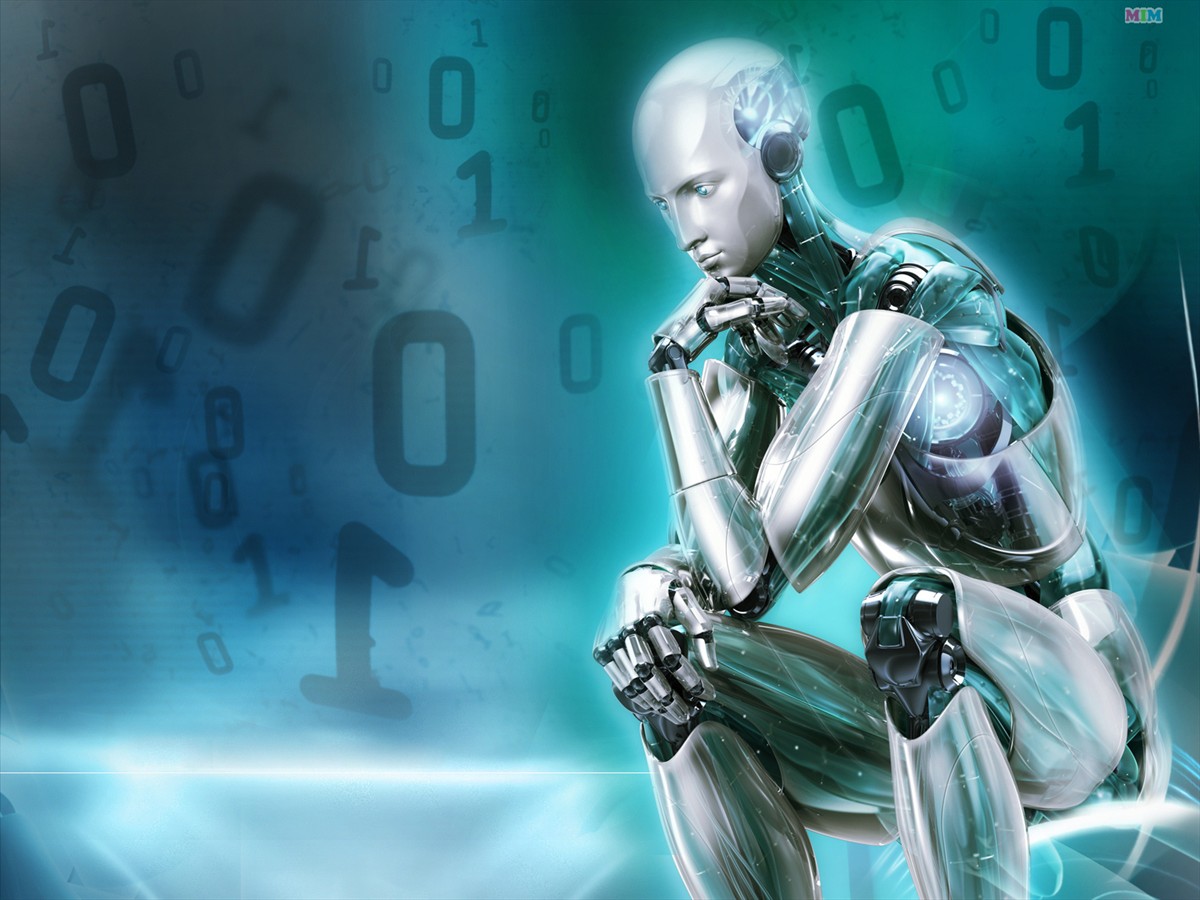
Week 3: Art and Robotics


In the readings, Walter Benjamin and Douglas Davis talked about how as art evolves and becomes more digital, it is loosing its aura. It becomes more difficult to determine whether something is the original or not which can take away some of the impact the art would have when experienced as it was intended to be. As machines and robotics become a greater part of art and design, each authors claims that the digital age is taking away from art’s value.


However, in the video about Dirk the homeless robot, people who encountered the robot experienced an eye opening and thought provoking display, demonstrated entirely by a machine. While this experience was very different from any traditional form of art, it got people thinking about how they generally perceive the homeless. This display can be seen as a social statement on how we often overlook certain people and see them as no different than robots. Many of the onlookers didn’t even notice that the homeless man was not actually alive unless they took the time to observe him.


 Even as art is becoming more accessible to wider audiences, it still requires the same concentration and interest to understand it. And while the experience may be altered by technology, it is still possible to control the viewer’s understanding in order to convey a specific or interpretable message. Modern technology will surely continue to influence how we perceive the world- many of the predictions Douglas Davis wrote about in 1995 have already been invented and integrated into our lives- but it can also make art and technology a more prevalent part of our daily lives, if we allow it to.  


"About From Cave Paintings to the Internet." About From Cave Paintings to the Internet. N.p., 16 Oct. 2013. Web. 17 Oct. 2013.

Dirk the Homeless Robot. YouTube. YouTube, 7 Sept. 2008. Web. 17 Oct. 2013.

Gabler, Neal. "Technology Changes How Art Is Created and Perceived." Los Angeles Times. Los Angeles Times, 06 June 2010. Web. 17 Oct. 2013.
The Costa Rican Times. Digital image. The Costa Rican Times RSS. N.p., n.d. Web. 17 Oct. 2013.

Sunday, October 13, 2013

Math and Art


Math can be used to describe almost any possible pattern, so it makes sense that it has a major influence on art and science- both of which often rely on representing and understanding patterns of nature. Artists use math in order to create realistic perspective and portrayals of real life. Brunelleschi realized that in order to make a painting realistic, all lines must converge to a vanishing point, which he discovered through his understanding of the geometry of vision.


As a math major, I’ve found that I enjoy math the most when it has practical uses that apply to real life and science. It has always fascinated me that patterns like the Fibonacci sequence can be observed so commonly in nature. Each ratio of numbers in the sequence is equal to the Golden Ratio, phi (1.618). The Fibonacci sequence can be observed in the construction of the ancient Egyptian pyramids and the Parthenon as well as in the growth of plants and the mating patterns of rabbits. Since the Fibonacci sequence seems to control so much of nature, it is important for artists to understand this mathematical pattern in order to portray reality accurately.


 I thought it was interesting that even people’s thinking patterns and the stock market can be explained by the Fibonacci ratio. It seems like a strange coincidence that one mathematical pattern could be the reason behind so much of nature, so there must be a logical reason for it. The video, "Fibonacci, Fractals and the Financial Markets" explained that nature prefers to evolve in the most efficient way, which could be why it follows this pattern. Since math can be used to explain much of the scientific world, and art is often a depiction of nature, math the main common factor between art and science. 


Fibonacci, Fractals and the Financial Markets. YouTube. YouTube, 21 May 2007. Web. 10 Oct. 2013.

"Fibonacci Numbers and Nature." The Fibonacci Numbers and Golden Section in Nature. N.p., n.d. Web. 10 Oct. 2013.

Nature, The Golden Ratio, and Fibonacci Too ... N.d. Photograph. Nature, The Golden Ratio and Fibonacci Numbers. Web. 10 Oct. 2013.

"The Golden Number." Phi 1618 The Golden Number RSS. N.p., 13 May 2012. Web. 10 Oct. 2013.